



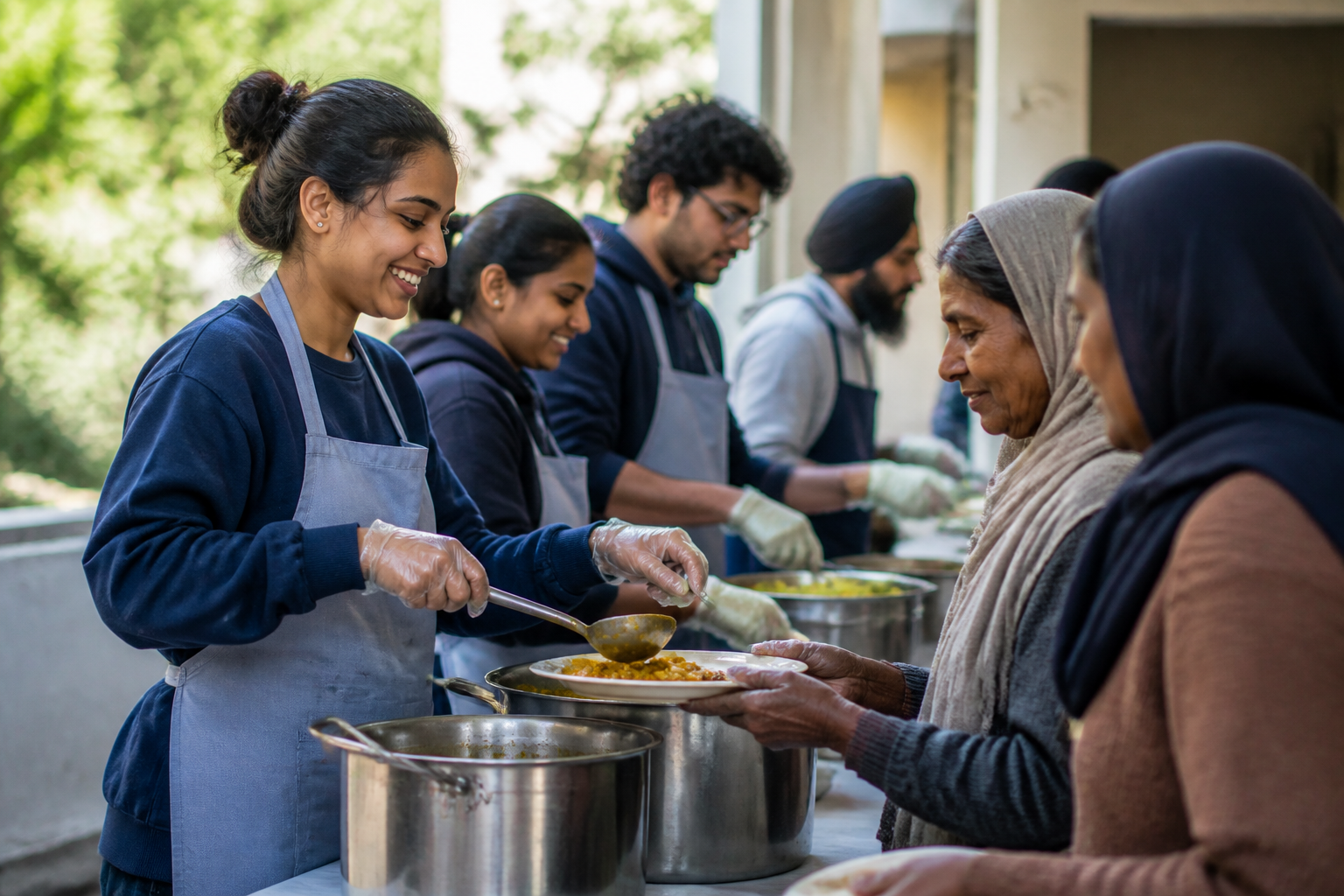
Seva is selfless service: giving time, effort, skills, or resources to support others without seeking personal recognition. This first time seva volunteer guide can help you arrive prepared, act respectfully, and follow through on the commitment you make. The most valuable starting point is simple: listen to the needs of the organization, treat every person with dignity, and take even small responsibilities seriously.
At Pingalwara Society of Ontario, volunteers support our work through administrative duties, special projects, and fundraising events. Volunteering is one practical way to contribute to the ongoing work of Pingalwara in Amritsar and to help build awareness of the needs of people with disabilities, older adults, and destitute people.
What seva means in a volunteer setting
Seva is often associated with Sikh values, but its core principle is widely understood: serve with humility, compassion, and care. In practice, that means focusing on the task and the people it is intended to support rather than on praise, status, or personal convenience.
Selfless service does not mean ignoring your limits or taking on work you cannot do safely. Honest service includes being clear about your availability, asking for instruction when needed, and communicating early if a commitment changes. A dependable volunteer who completes a modest role well is often more helpful than someone who accepts too much and cannot follow through.
It is also useful to remember that seva can take different forms. Time is one contribution, but so are practical skills, careful event support, administrative help, fundraising, and sharing accurate information about the cause. The role matters less than the spirit and responsibility brought to it.
How to prepare before your first volunteer shift
Preparation gives you the confidence to be useful from the start. Before applying or accepting an opportunity, review the role carefully and make sure you can meet its basic expectations.
- Understand the purpose of the work. Learn what the activity is trying to accomplish and who it supports. This keeps your attention on the mission rather than only on the individual task.
- Confirm your availability honestly. Check the date, start and finish time, travel needs, and any ongoing commitment before saying yes. Avoid relying on a vague intention to attend.
- Ask what to bring and what to wear. Some activities may have practical clothing, identification, or material requirements. Do not assume; ask the organizer in advance.
- Consider your skills and limits. Administrative experience, event organization, communications, design, or other skills can be useful for special projects. Share relevant experience without overstating it, and ask where it would be most helpful.
- Plan to arrive early enough to settle in. A few extra minutes can give you time to check in, hear instructions, and begin without rushing.
New volunteers can learn about volunteering with us and submit a volunteer application. Our volunteer opportunities include integral administrative duties, support for special projects, and help at fundraising events. In some cases, volunteers are also trained.
Respectful conduct is part of the service
Respect is not an extra courtesy added after the work is done. It is part of seva itself. Whether you are helping behind the scenes or participating in a public event, your conduct affects the experience of fellow volunteers, organizers, and the people a charitable effort is meant to serve.
Lead with dignity, not assumptions
People may have different communication styles, mobility needs, personal histories, cultures, and preferences. Do not presume that a disability, age, financial hardship, or other circumstance defines someone or tells you what help they want. Address people directly and politely, use the language they use for themselves when known, and ask before offering assistance.
A practical question such as, “Would you like a hand with that?” is better than stepping in without permission. If someone declines, accept the answer graciously. Respect includes allowing people to make their own choices.
Protect privacy and personal boundaries
Volunteer work can bring you into contact with personal information, private conversations, or sensitive situations. Keep what you learn within the appropriate volunteer or staff context. Do not share names, photographs, stories, contact details, or health-related information without clear permission and organizational direction.
This also applies online. A meaningful experience does not automatically make a person’s story yours to post. When in doubt, ask the organizer before taking photos or sharing any details on social media.
Follow direction, especially when you are new
Every organization and activity has its own procedures. The best way to contribute is to listen during orientation, follow the assigned process, and ask before changing how something is done. If you notice a problem, bring it to the appropriate person rather than trying to solve it alone without context.
Questions are a sign of care when they help prevent mistakes. It is better to ask for clarification than to guess about a responsibility, particularly where privacy, safety, money, records, or public communication are involved.
Reliability turns good intentions into meaningful help
Volunteer coordination takes time. When you commit to a shift, event, or project, someone may be planning tasks around your participation. Reliability helps organizers distribute work fairly and prevents last-minute gaps.
Build these habits from your first experience:
- Respond to messages and confirm details when requested.
- Arrive at the agreed time and let the organizer know promptly if an unavoidable delay occurs.
- Complete the task you accepted, or ask for help early if you are unable to finish it.
- Tell the organizer as soon as possible if you need to cancel. Do not simply fail to appear.
- Accept feedback without taking it personally. It helps the activity run more smoothly for everyone.
Consistency does not require an unlimited schedule. It means setting a realistic level of involvement and honoring it. If you can only volunteer occasionally, say so clearly. A transparent commitment allows us to plan appropriately.
Questions to ask before you get involved
The right questions help you understand the role and decide whether you can serve well. They also show that you are approaching seva with thoughtfulness rather than assumption.
- What is the goal of this volunteer activity, and what would a helpful contribution look like?
- What tasks will I be responsible for?
- Is there an orientation, training, or briefing before I begin?
- Who should I report to if I have a question during the activity?
- Are there guidelines for confidentiality, photography, communication, or social media?
- What should I wear or bring?
- How long is the commitment, and what should I do if my availability changes?
- Are there ways to use a particular skill on an administrative or special project?
You do not need to ask every question at once. Focus first on the information that lets you show up prepared, protect others’ privacy, and understand your role.
Approach fundraising and public events with care
Fundraising events are often a visible part of charitable work, and volunteers can help create an organized, welcoming experience. The same principles of seva apply: be accurate, respectful, and attentive to the task at hand.
When discussing the cause, share only information provided or approved by the organization. Do not guess about how donations are used, make promises about outcomes, or speak on behalf of people whose experiences you do not know. If someone asks a question you cannot answer, it is better to connect them with the appropriate organizer or official information.
For those who want to take a more active role in bringing people together, we also provide a way to start a fundraising campaign for Pingalwara. Fundraising works best when the message stays focused on the mission and when organizers communicate clearly about the activity and its purpose.
Let service be a practice of learning
A first volunteer experience does not need to be perfect. You may need to learn unfamiliar procedures, meet new people, or adjust to a different pace of work. What matters is being present, receptive, and willing to improve.
After the activity, take a moment to reflect: Did I understand my role? Did I communicate clearly? Did I treat people with dignity? Is there a skill or instruction that would help me contribute more effectively next time? Reflection turns a single act of service into a more thoughtful ongoing practice.
Seva begins with a willingness to help, but it becomes meaningful through respect, reliability, and care. By preparing well and staying focused on the needs of others, you can make your first volunteer experience a useful contribution to our shared mission.
Explore volunteer opportunities with Pingalwara Society of Ontario when you are ready to take the next step.